
In the dim corridors of time, where the echoes of ancient voices still linger, lies a phenomenon that has puzzled and fascinated humanity for centuries: glossolalia. Often referred to as “speaking in tongues,” this enigmatic practice has woven its way through the tapestry of human history, leaving behind a trail of mystery and intrigue. But what exactly is glossolalia, and why has it captivated so many across different cultures and eras? 🌍

To the untrained ear, glossolalia may sound like a chaotic jumble of sounds, devoid of any discernible meaning. Yet, for those who have experienced it or witnessed its power, it holds a deeper, spiritual significance. In this blog post, we will embark on a journey through time, unraveling the mysteries of glossolalia and exploring its profound influence on ancient and forgotten traditions. Prepare to delve into a world where the ordinary transcends into the extraordinary, where the spoken word becomes a bridge to the divine.
Throughout history, glossolalia has manifested in various forms across the globe, from the ancient rituals of the Eleusinian Mysteries in Greece to the shamanistic practices of indigenous tribes in the Americas. These diverse expressions of glossolalia share a common thread: the belief in its ability to connect practitioners with higher planes of consciousness or spiritual realms. But how did such a practice emerge, and what role did it play in these rich cultural traditions? 🤔
As we navigate the historical landscape of glossolalia, we will explore its roots in ancient religions and spiritual practices. We will examine its presence in the sacred rites of the Orphic and Dionysian cults, where initiates sought to commune with gods through ecstatic speech. Additionally, we will uncover the role of glossolalia in early Christianity, where it was seen as a manifestation of the Holy Spirit, a divine gift bestowed upon the faithful. These accounts, deeply embedded in religious texts and oral traditions, offer a glimpse into the significance of glossolalia in the spiritual lives of ancient peoples.
But glossolalia is not merely a relic of the past. It has persisted into the modern era, evolving and adapting to new cultural contexts. Today, it is often associated with charismatic Christian movements, where it continues to be viewed as a powerful spiritual practice. We will examine how glossolalia has been embraced and interpreted by contemporary religious communities, exploring the psychological and social dimensions of this fascinating phenomenon.
Moreover, our exploration will not be limited to the realms of religion and spirituality. We will delve into the psychological and neurological aspects of glossolalia, seeking to understand what happens in the brain during these extraordinary experiences. Recent scientific studies have shed light on the cognitive processes involved, offering intriguing insights into the nature of human consciousness and language. These findings not only enhance our understanding of glossolalia but also challenge our perceptions of the boundaries of the mind.
Throughout this journey, we will also consider the cultural and symbolic significance of glossolalia in art and literature. From the mystical poetry of Rumi to the modernist works of James Joyce, the motif of ecstatic speech has inspired countless artists and writers. We will explore how glossolalia has been depicted and interpreted in various art forms, reflecting its enduring allure and the quest for transcendent expression.
Join us as we uncover the layers of glossolalia, from its ancient origins to its contemporary manifestations. This exploration will illuminate the ways in which this mysterious practice has shaped and been shaped by human culture, spirituality, and the ever-evolving quest for understanding the unknown. Whether you are a seasoned scholar or a curious seeker, this journey promises to expand your horizons and deepen your appreciation for the intricate dance between language, consciousness, and the divine. ✨
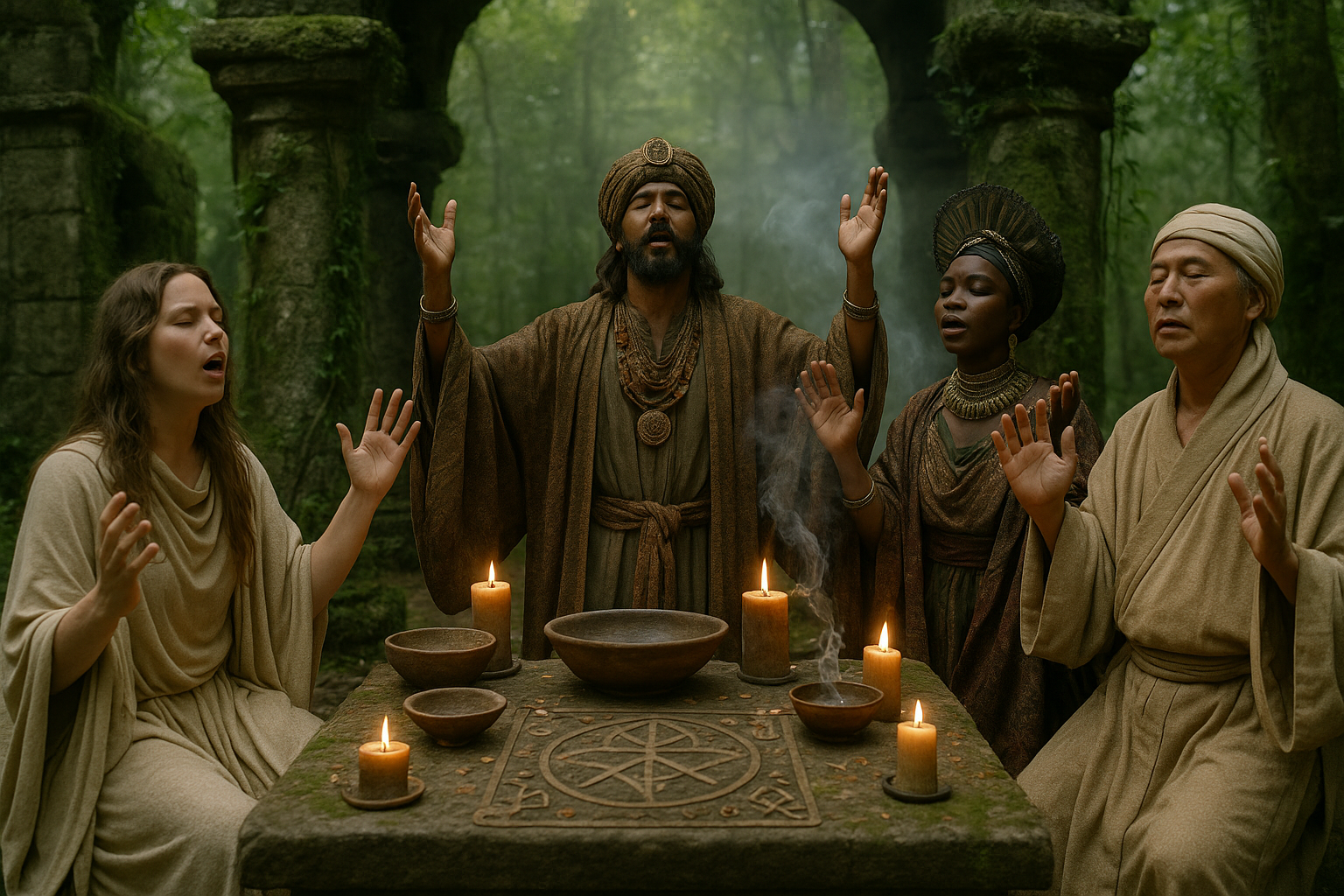
Conclusion: Embracing the Mystical and Transformative Power of Glossolalia
In our journey through the fascinating world of glossolalia, or speaking in tongues, we’ve traversed ancient paths and explored the rich tapestry of spiritual traditions that have embraced this enigmatic phenomenon. From the deep-rooted rituals of ancient civilizations to its presence in modern religious practices, glossolalia emerges as a powerful testament to humanity’s enduring quest for transcendence and connection with the divine.
Throughout this exploration, we have uncovered the multifaceted roles that glossolalia has played across different cultures and eras. It has served as a tool for spiritual communication, a bridge to the divine, and a means of personal transformation. Each tradition, whether it be the ecstatic utterances of the ancient Oracles or the vibrant expressions found within contemporary Pentecostalism, offers unique insights into the human spirit’s capacity to reach beyond the tangible and into the mystical realms.
One of the most compelling aspects of glossolalia is its ability to transcend linguistic and cultural barriers, uniting individuals in a shared experience of spiritual ecstasy. This universality speaks to a fundamental aspect of the human condition: the desire to connect with something greater than oneself. It challenges us to consider the ways in which language, spirituality, and consciousness intersect, creating a rich tapestry of human experience that is both profound and mysterious.
The importance of understanding and appreciating glossolalia extends beyond mere academic curiosity. In a world where division often overshadows unity, exploring such traditions can inspire greater empathy and open-mindedness. By acknowledging and respecting the diverse ways in which people seek spiritual fulfillment, we foster a more inclusive and compassionate global community. 🌍❤️
As we conclude this exploration, let us be reminded of the transformative potential that lies within embracing the unknown and the mystical. Glossolalia, with its rich history and spiritual depth, invites us to look beyond the ordinary and engage with the extraordinary. Whether through personal reflection, scholarly inquiry, or spiritual practice, there are countless ways to engage with this phenomenon and apply its lessons to our lives.
We encourage you to delve deeper into the mysteries of glossolalia and consider how these insights might enrich your own spiritual journey. Share your thoughts, experiences, or questions in the comments below. Let’s continue this conversation and explore the many dimensions of human spirituality together. Feel free to share this article with others who might be intrigued by the mysteries of glossolalia. Let’s build a community that celebrates the diversity and richness of human expression. ✨🗣️
Thank you for joining us on this enlightening journey. May the mysteries of glossolalia continue to inspire wonder and curiosity in all who seek to understand the deeper aspects of human existence.
